Frame - Engaging a site
Chicago, IL - 2021
Studio

An architectural framework for the activation and sensitive restoration of the former South Works steel industrial complex in Chicago.
This initiative transforms an abandoned industrial giant, now reclaimed by nature, into a vibrant public amenity—a hybrid landscape where environmental remediation meets community engagement and cultural preservation.
Frame operates on multiple interrelated layers, designed to loosely curate a dynamic relationship between human visitors, the site's raw natural environment, and the monumental industrial remnants.
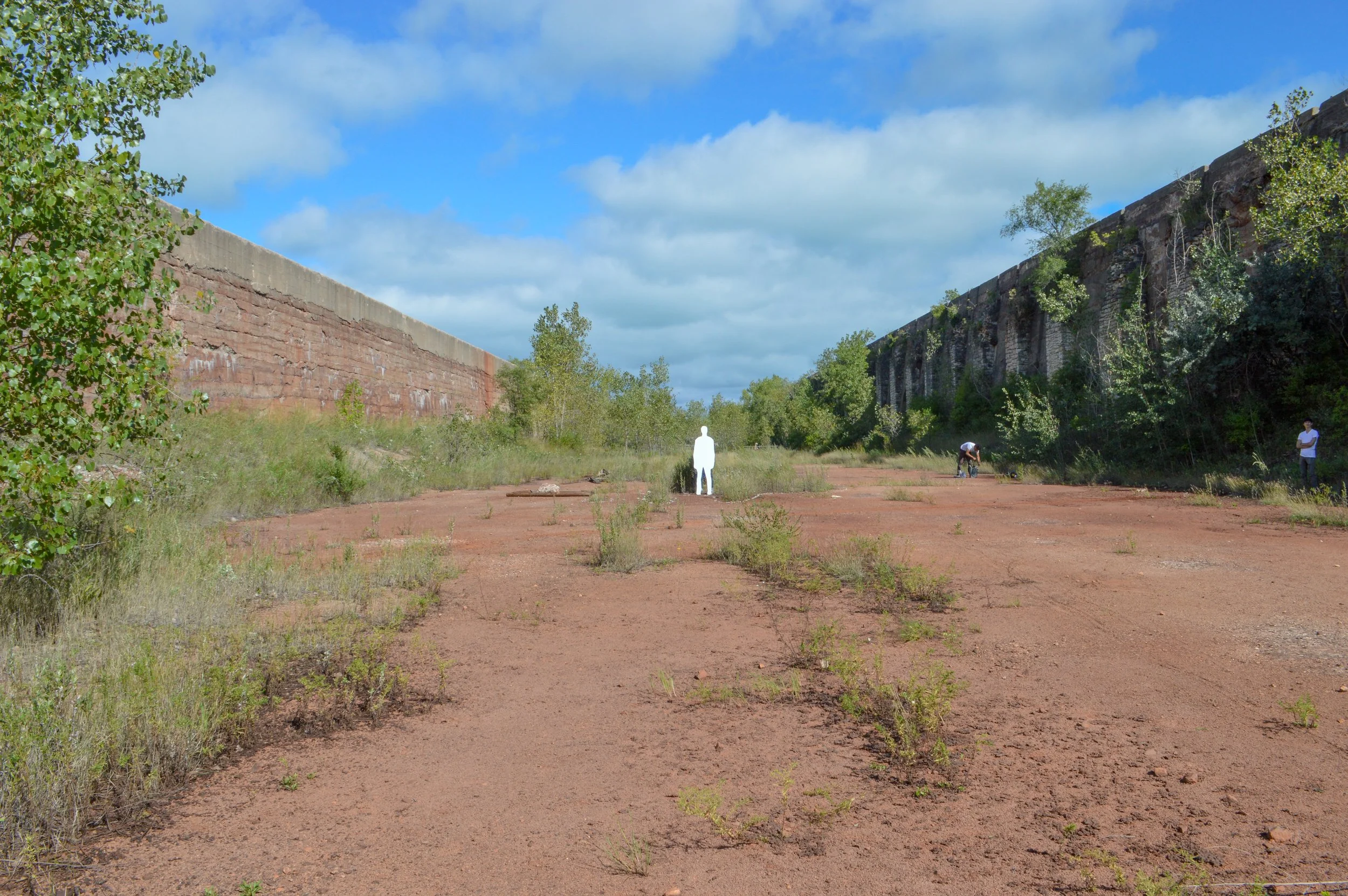

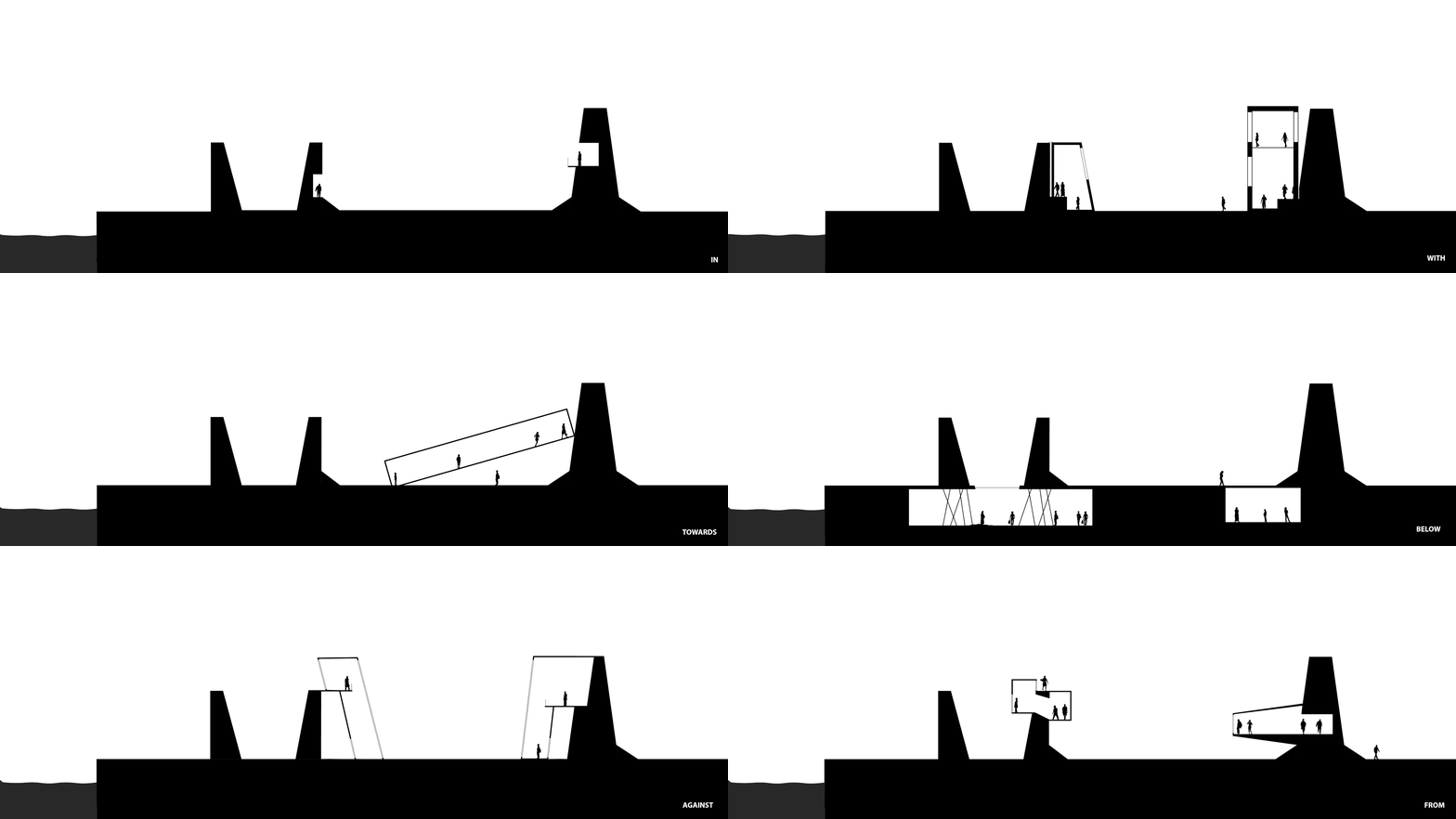
The process of exploration involved a series of gestural, "prepositional" acts documented through diagramming, physically and conceptually engaging the site's monumental industrial walls. This approach sought to translate abstract spatial relationships into tangible human interactions and experiences, using the existing structure as a constant datum for new programmatic potential.
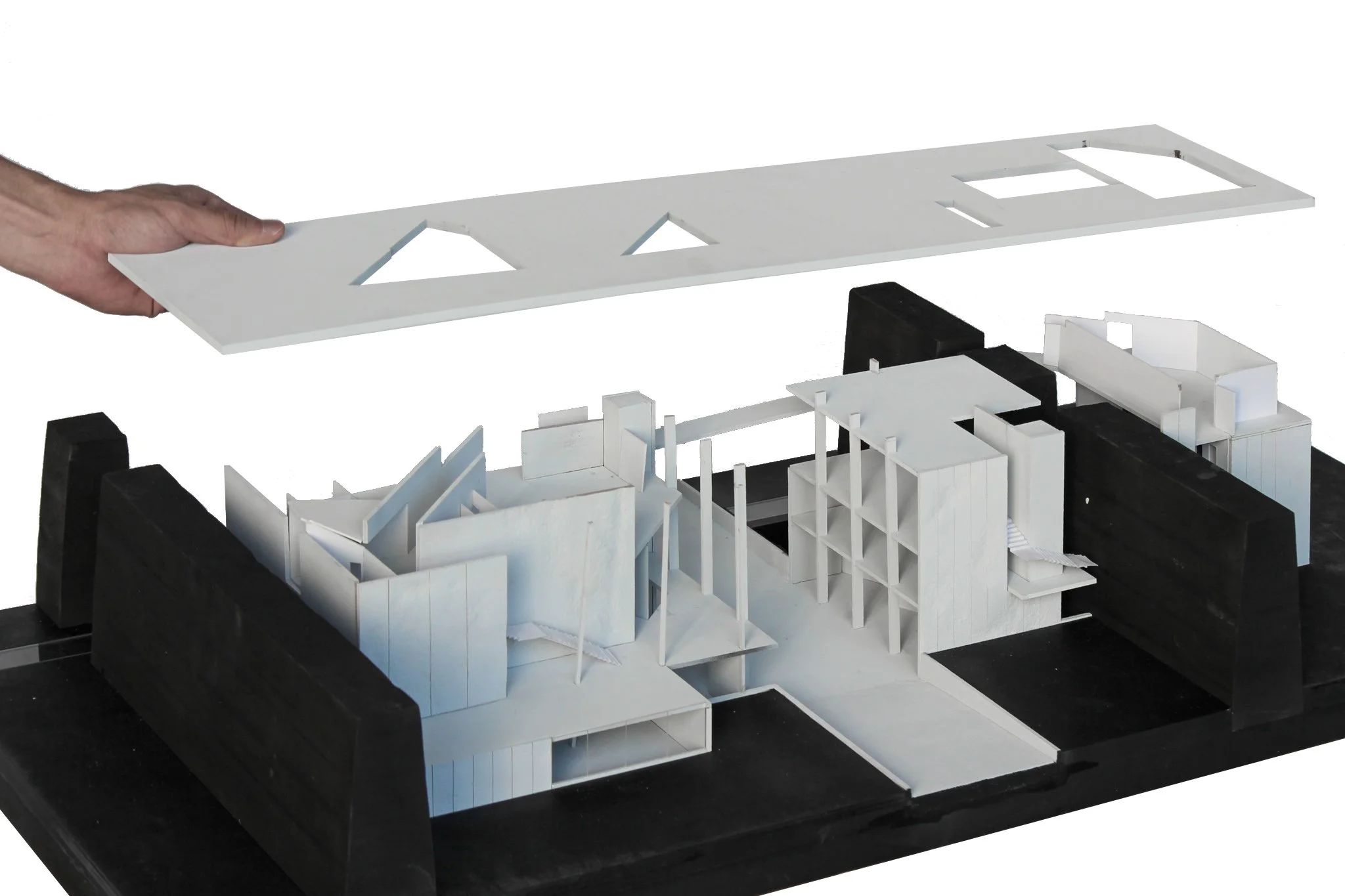
Circulation is highly prioritized, moving visitors through diverse conditions and experiences. The design employs systems that are both free and coaxedn guiding visitors through narrative sequences. This choreography of movement intends to evoke a sense of awe, manipulating height and the perception of the site relative to the position in elevation, leveraging X, Y, and Z thresholds within the landscape.


![Frame - Engage a site [5 of 14]](https://images.squarespace-cdn.com/content/v1/63cf593325095c34855bda40/82f20c54-f1d0-45d7-a887-e1cd5a1c6749/PLAN+-+01.jpg)
![Frame - Engage a site [6 of 14]](https://images.squarespace-cdn.com/content/v1/63cf593325095c34855bda40/60a69eb5-8e9f-41a1-bf5f-5dcf6deb192c/PLAN+-+02.jpg)
![Frame - Engage a site [7 of 14]](https://images.squarespace-cdn.com/content/v1/63cf593325095c34855bda40/004386fc-6d7f-4d7c-936e-aa1a96f7e0c3/PLAN+-+03.jpg)
![Frame - Engage a site [8 of 14]](https://images.squarespace-cdn.com/content/v1/63cf593325095c34855bda40/fbde0789-b522-45a5-b02e-d7b864ae55b1/PLAN+-+04.jpg)
![Frame - Engage a site [12 of 14]](https://images.squarespace-cdn.com/content/v1/63cf593325095c34855bda40/b4d3725d-445c-4826-8e6e-b2595b3eb4b5/SiteSystDiagrams_02.jpg)
![Frame - Engage a site [13 of 14]](https://images.squarespace-cdn.com/content/v1/63cf593325095c34855bda40/b6b263ca-7451-4d65-aeda-d65a0009cd86/SiteSystDiagrams_03.jpg)
![Frame - Engage a site [14 of 14]](https://images.squarespace-cdn.com/content/v1/63cf593325095c34855bda40/3fb78767-5469-490a-92f8-c62adfb47c69/SiteSystDiagrams_04.jpg)
![Frame - Engage a site [11 of 14]](https://images.squarespace-cdn.com/content/v1/63cf593325095c34855bda40/e7d3e502-4b32-4563-ba42-cb3450119f45/SiteSystDiagrams_01.jpg)
The site strategy is defined by a rigorous application of a proportional and place-of-action matrix. An overlaid 190’ Grid establishes a workable substructure for organizing space while remaining adaptable:
X Axis (Programmatic Conditions): Defines a spectrum of experience, balancing fixed zones (designated existing areas deemed unique or unprogrammed) with flex zones (areas open to change determined by the remediation process and community needs).
Y Axis (Fixed Walls): Utilizes the existing, imposing industrial architecture to define spaces with interrelated proportions, creating dramatic architectural boundaries that frame the new environment.
Z Axis (Levels of Interaction): Specifies various elevations at which a human can interact with and perceive the immense scale of the walls and the unfolding landscape.

The architecture uses framing devices, both literal and perceptual, to curate the relationship between human, nature, and the formidable walls of the past. The remediation process itself becomes a visible, educational program.

