Speculative Southside
Chicago, IL - 2021
Ideas Competition
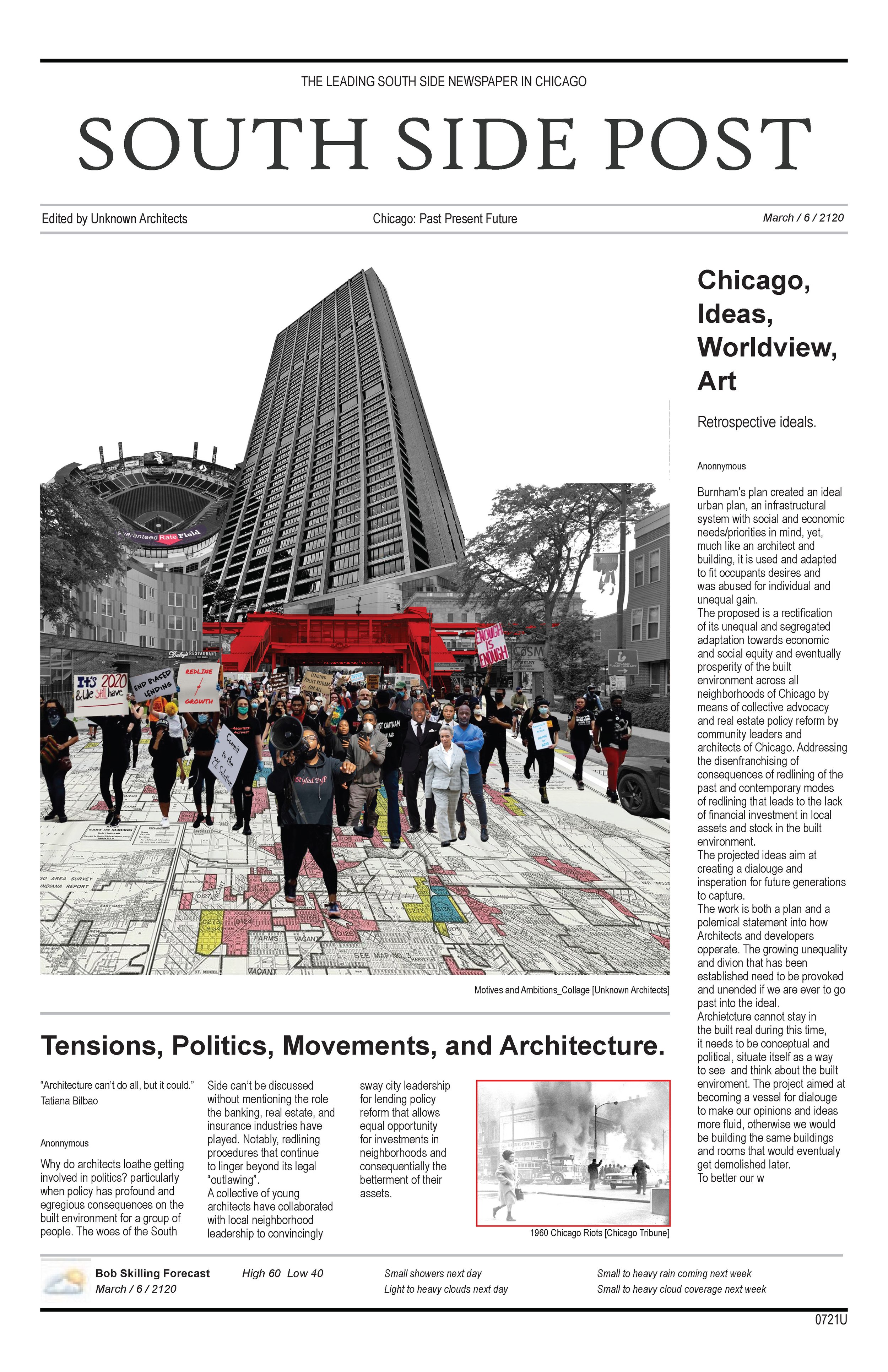
Burnham’s Plan set out an ideal civic framework rooted in infrastructure, growth, and public good. Yet while its physical systems reached many neighborhoods, the economic systems never followed. Redlining, inequitable lending, and racialized disinvestment shaped a city where access to capital, stability, and opportunity were unevenly distributed.
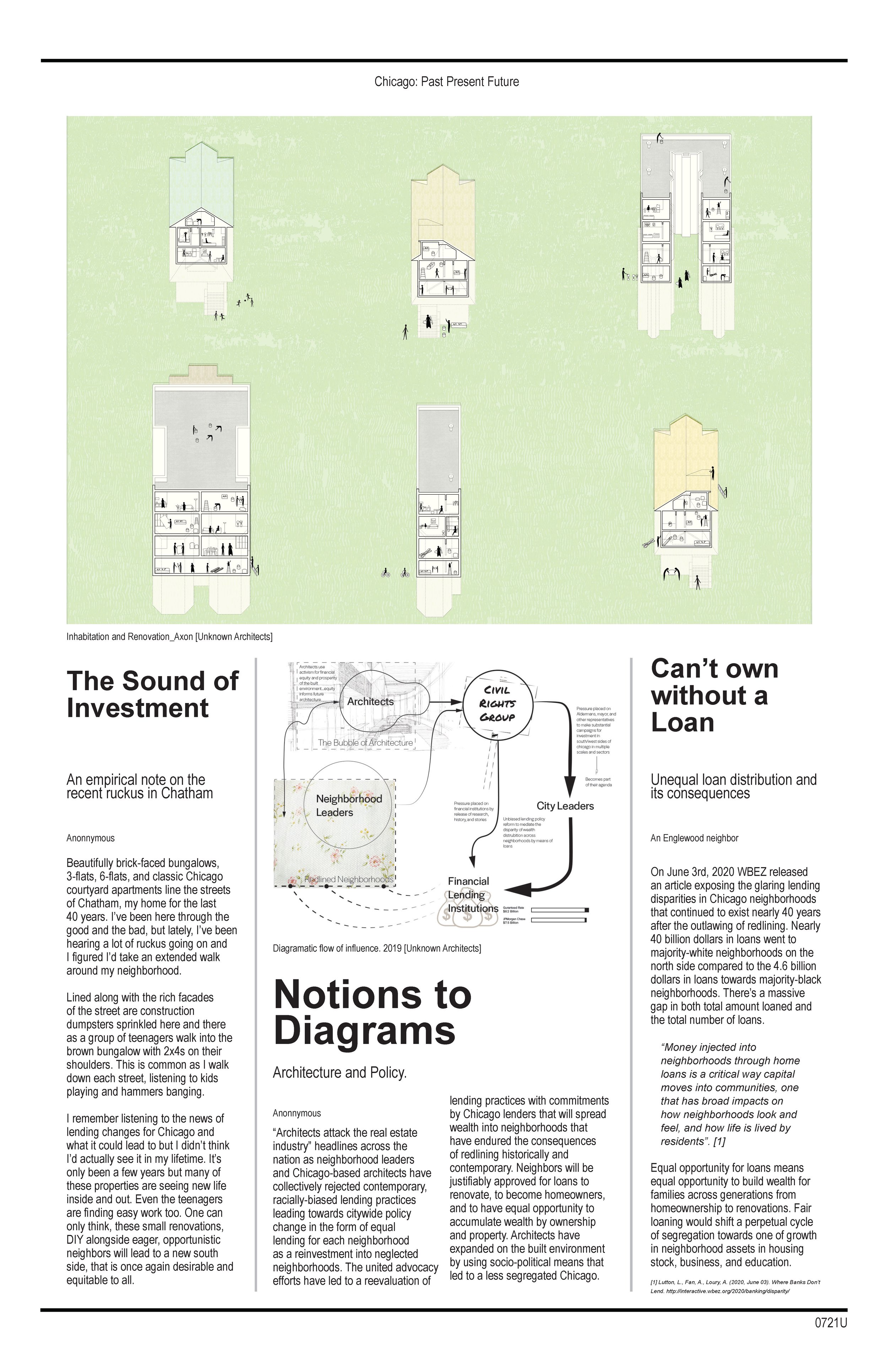
This proposal positions the present moment as a future history in progress. Architects, community groups, and advocacy organizations across Chicago have united to challenge discriminatory lending practices, leading to new policies that ensure equal access to financing in every neighborhood. Economic equity becomes the foundation for social and spatial equity, allowing residents to renovate their homes, build generational wealth, and strengthen ownership. Local businesses and developers reinvest in long neglected areas, working with architects to restore existing buildings and introduce new community assets. Wealth is redistributed into the built environment, stabilizing communities and reducing displacement.
Burnham wrote that the land belongs to the people, yet the social agenda in his early notes was erased in the final publication. This project revives that missing commitment. It confronts the long legacy of redlining and the contemporary lending patterns that continue to restrict investment. Research from the Urban Institute shows that reducing segregation would increase educational attainment, lower homicide rates, raise Black per capita income, and add billions to the regional economy. Community land trusts offer one model for stability, preserving ownership and keeping wealth local.
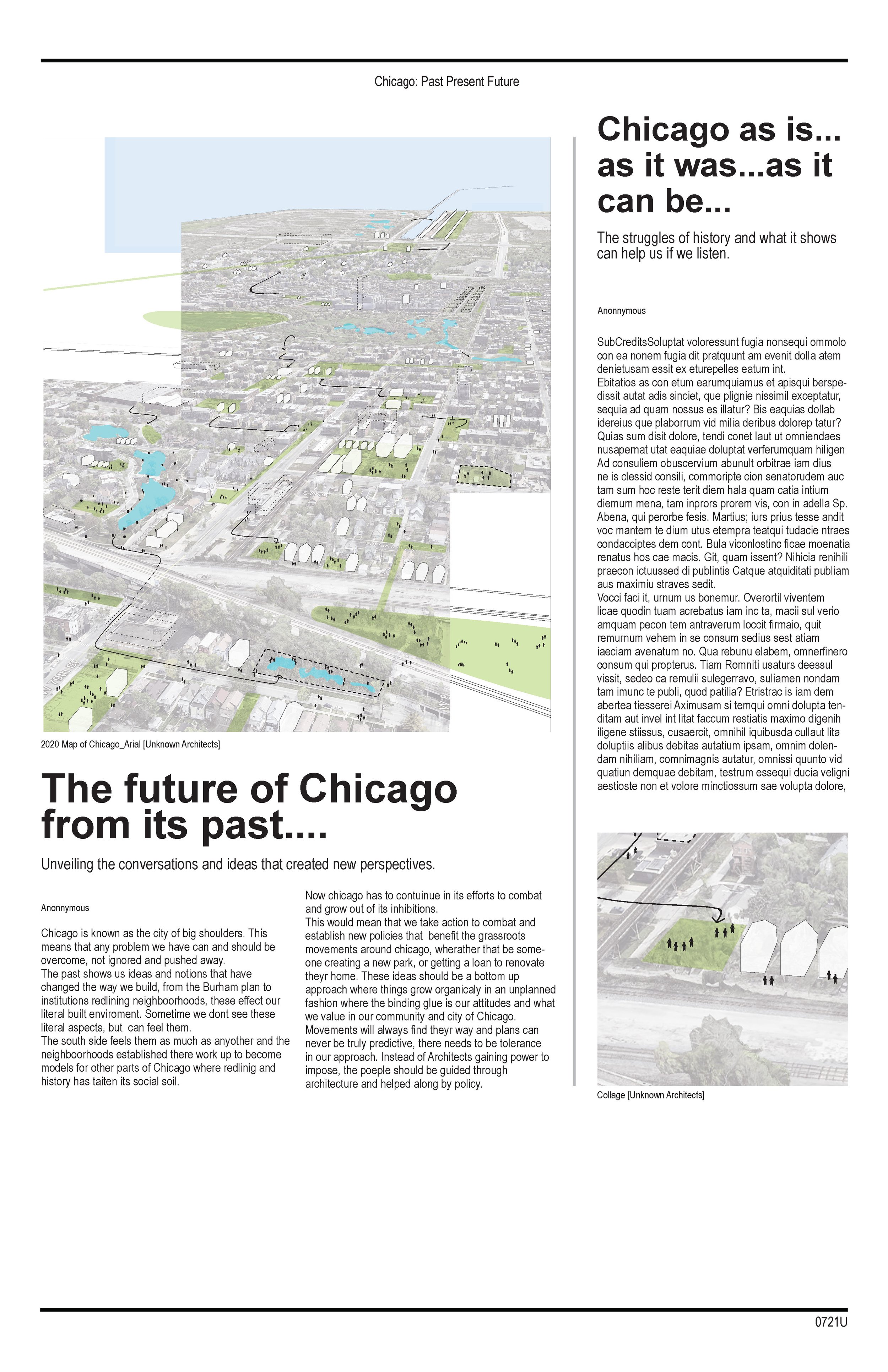
Our work is both a plan and a provocation. Architecture cannot remain confined to form; it must engage policy and advocate for equitable conditions. This proposal calls for a bottom up approach where neighborhoods guide their own growth, vacant land becomes active public space, and access to financing is fair and consistent. By aligning community leadership, architects, and lenders, Chicago can move toward a future where prosperity is shared and every neighborhood can fully participate in the shaping of the city.